Blame it on Hollywood
In my family, education was a given. My parents had university degrees, my maternal grandparents too, and so did most of the adults around us. It never occurred to me that there was another path. The only real question was what I would study, not if.
The answer revealed itself when I was 12.
I watched Medicine Man, a film about two biochemists living deep in the Amazon rainforest, studying plants used by local tribes in hopes of discovering a cure for cancer. The whole thing felt heroic to me, not glamorous, but meaningful. These scientists weren’t living comfortably or chasing prestige; they were devoting their lives to something that could benefit all of humanity.
I didn’t really know what biochemistry was at the time, so I borrowed a textbook from my older sister. I remember the thrill of turning the pages, those intricate molecular structures, long chemical names, and invisible mechanisms that somehow governed all life. I announced with absolute certainty:
“I will study biochemistry and find a cure for cancer.”
My sister laughed, pointing out that I barely knew basic chemistry, but her comments didn’t land. The decision had already taken root.
The Seed Was Planted Earlier
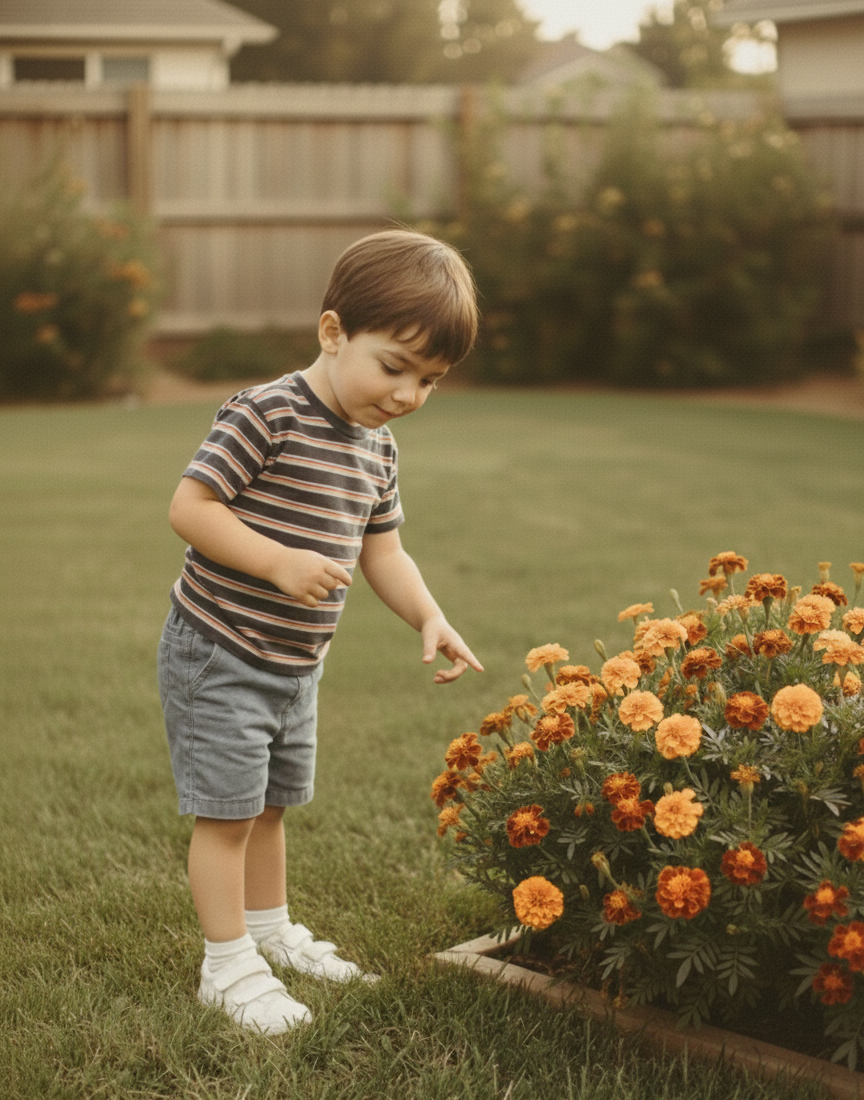
In the marigolds garden.
That movie may have sparked the clarity, but the deeper story began years earlier.
My grandparents had a small countryside house with gardens and an orchard where we spent every weekend and summer. It was my childhood kingdom, a place where curiosity was free to roam. My grandmother taught me how to garden, and I fell in love with the quiet, patient rhythm of growing things.
Watching marigolds taught me genetics long before I knew the word. We had two main varieties, pale orange and deep red, and every so often, a flower would bloom in an unexpected shade somewhere in between. I was mesmerized. How did those traits carry forward? How did a tiny seed contain so much coded information, knowing exactly when and how to unfold into life?
I didn’t yet have language for it, but I was hooked:
I wanted to understand how life works.
When the Dream Became Real
Many children dream big, and most move on.
I might have too, if life had not intervened.
When I was 15, my mother was diagnosed with stage 4 liver cancer. She died soon after.
There are moments that split your life into before and after. This was mine.
The grief was overwhelming: anger, helplessness, the sudden collapse of anything I thought I could rely on. And in the middle of that pain, my childhood dream shifted from curiosity to conviction. I was no longer simply fascinated by the biology of life. I needed to understand the biology of disease, of loss, of why things fall apart.
Looking back, I see how idealistic my belief was, that I could somehow prevent others from experiencing what I had. But I also see how that loss shaped me. It gave me a kind of inner steel, a capacity to endure. So many challenges later in life felt like dents rather than devastation because I had already survived the unthinkable.
Science as a Way Out
Studying molecular biology and physiology wasn’t only about purpose. It was also about escape.
I grew up in Belgrade, Serbia, during years of sanctions, instability, and a government that suffocated any real sense of progress. Opportunities were scarce, especially in science. On top of that, after my mother’s death, we were a single-income household. A future where my knowledge would be valued felt impossibly far away.
Like many of my university peers, I pinned my hopes on leaving: working hard, getting top grades, trying to find any lab abroad willing to take me. Exchange programs didn’t exist for us. Visas were difficult. Funding was nonexistent. I sent dozens of emails to labs around Europe. A few professors were interested, but practical obstacles always stood in the way.
It was discouraging but not defeating.
By then, I had learned to keep going.
Hard Work Pays Off
Despite limited hands-on experience, my academic record opened two doors: invitations to interview for prestigious PhD programs.
One in Austria, which I couldn’t attend, because I couldn’t get a visa appointment in time. I remember thinking, If it’s not this one, something else will come.
The second was in Zurich, Switzerland. I spent four days there presenting my modest master’s project, answering questions, and speaking from the depth of everything that had shaped me to that point.
And I got the position.
I was becoming a scientist.
And at that moment, it felt like the beginning of a new chapter that had the tone of a fairytale. After years of loss, limitation, and determination that sometimes felt like swimming upstream, I suddenly had a fresh start: a new country, a new culture, a new language, and a life that felt full of possibility again. I remember walking through the streets of Zurich, feeling like the world had opened itself up to me. The horizon felt wide for the first time in a long time.
It was as if all the effort, grief, and perseverance had finally carried me to a place where life could unfold differently:lighter, fuller, more hopeful. It felt like smooth sailing ahead, a happily-ever-after moment. I didn’t know the twists and turns life still had waiting, ones unlike anything I could have imagined back then.
But I didn’t need to know.
For the first time, I was standing at the beginning of something new, breathing in possibility, ready for whatever came next.
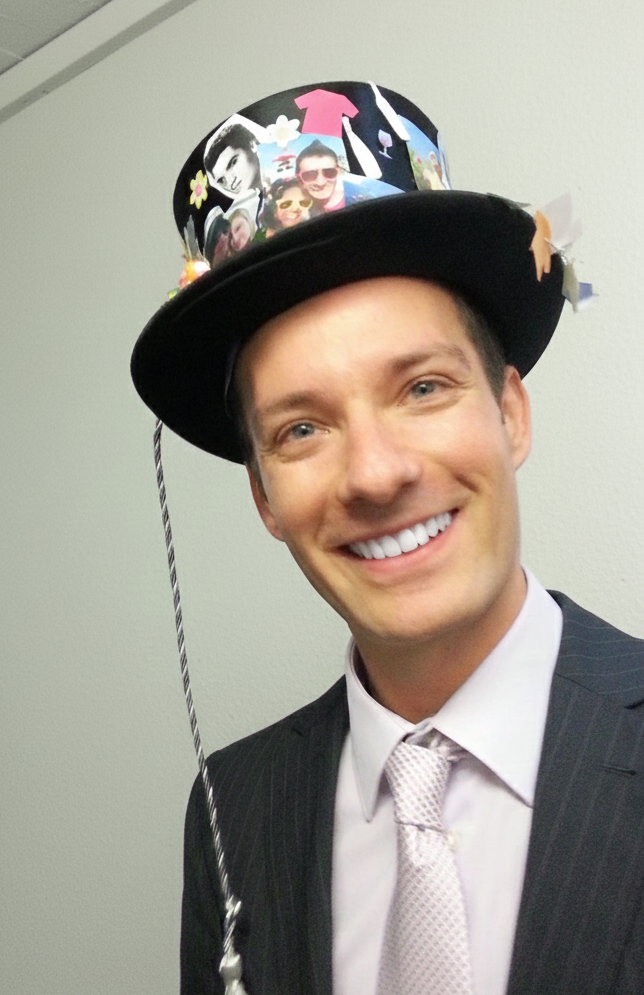
The day when I became a doctor.